
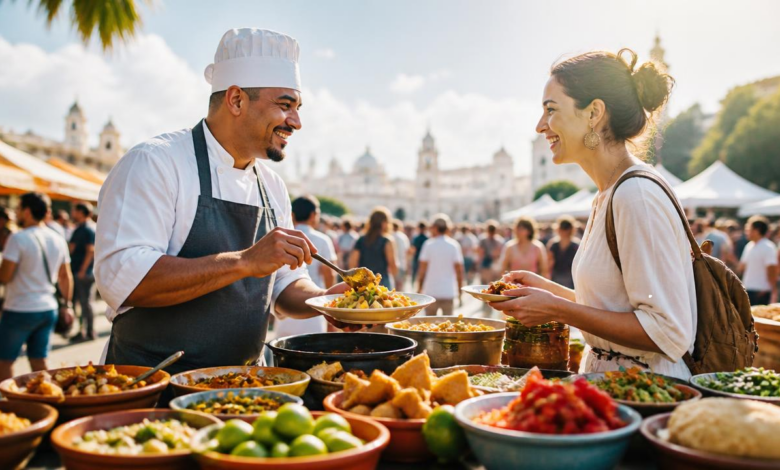
Food offers a unique window into any destination. Before memorizing street names or local customs, a single bite can reveal a region’s climate, trade history, migrations, cherished memories, and deep-seated pride. This inherent power makes global food festivals and regional delicacies compelling invitations to travel the world.
Discovering the World Through Culinary Traditions
Food festivals worldwide transform public spaces into vibrant, living museums of taste. They are more than just opportunities to eat well; they showcase how communities celebrate harvests, preserve ancestral recipes, and craft local ingredients into defining elements of their identity. These events offer an authentic journey into a place’s soul.
For travelers seeking genuine culinary experiences, these gatherings provide much more than a list of dishes. They foster direct interactions with producers, home cooks, fishers, bakers, and street vendors. Often, the true culinary secrets reside in the precise techniques, perfect timing, and time-honored traditions passed down through generations.
Why Food Festivals Are More Than Just a Meal
A truly great festival accomplishes two things simultaneously: it nourishes your body and enriches your mind. Gastronomic tourism, at its best, connects visitors to history through flavors that have endured through wars, shifting trade routes, colonization, religious customs, and evolving tastes. A regional dish can indeed serve as a local archive.
This rings especially true at harvest festivals, wine celebrations, and communal feasts, where the setting itself narrates a significant part of the story. You are not merely tasting cheese, bread, seafood, or sweets. Instead, you are witnessing how seasons profoundly shape a cuisine and how entire towns unite around food as a symbol of celebration and continuity.
These vibrant events also provide crucial support for local economies. Farmers, fishers, cheesemakers, brewers, and small restaurants frequently rely on food-focused travel for both income and visibility. Responsible visitors can significantly contribute to sustaining culinary heritage by choosing locally owned businesses and understanding the context behind what they consume.
For a deeper understanding of making respectful travel choices, our guide to ethical tourism and supporting local communities offers valuable insights. This resource perfectly complements any culinary adventure you plan to undertake.
Iconic Global Food Festivals You Won’t Want to Miss
Oktoberfest, Germany: Beyond Beer, Into Bavarian Flavors
Oktoberfest is often primarily associated with its iconic giant beer tents, yet its culinary allure is equally revealing. In Munich, the festival’s food offerings include succulent roast chicken, hearty sausages, massive pretzels, tender pork knuckle, satisfying potato dumplings, and various sweet mustard combinations. These dishes reflect comforting Bavarian cooking, scaled for a grand celebration.
The festival’s deeper charm lies in its rich rituals. Recipes are firmly rooted in regional agriculture, time-honored brewing traditions, and the joy of communal dining. The experience transcends any single signature dish, emphasizing instead how beer, bread, meat, and hospitality collectively form a cohesive cultural system, creating an unforgettable atmosphere.
For comprehensive planning details and official information, the Official Oktoberfest Website remains the most authoritative and reliable source. It offers all you need to know for a well-prepared visit to this world-renowned event.
La Tomatina, Spain: Spectacle with Culinary Rewards Nearby
La Tomatina stands out as one of the world’s most unusual food festivals, though the famous tomato fight itself is not the culinary event. The true gastronomic delight awaits before and after the main spectacle. Visitors can then explore Valencia’s rich food traditions, savoring delicious paella, fideuà, jamón, and vibrant produce from the Mediterranean coast.
This festival beautifully illustrates why international food events should always be understood within their broader context. While a festival might capture global attention through its sheer spectacle, the surrounding regional delicacies often provide a far richer and more profound culinary experience. Remaining curious beyond the primary event is key to uncovering hidden culinary gems.
Cherry Blossom Season in Japan: The Taste of Ephemeral Beauty
Japan’s celebrated cherry blossom season isn’t a single organized food festival, but it fosters one of the world’s most distinctive seasonal eating cultures. During hanami picnics, people gather beneath the blooming trees, enjoying carefully prepared bento boxes, sakura-themed sweets, dango, fragrant tea, and other limited seasonal specialties. These dishes prioritize visual elegance as much as delightful flavor.
These moments vividly demonstrate how food history and seasonality are intricately woven into Japanese culture. Presentation, precise timing, and the overall atmosphere hold profound importance in their culinary traditions. Travelers interested in planning a culinary journey to Asia often start with major cities, but Japan truly rewards those who slow down to appreciate how even a simple picnic can become a meaningful ceremony.
Taste of Chicago, USA: A City’s Diversity Sampled
The Taste of Chicago festival magnificently reflects the rich diversity of American food culture, perhaps better than any single restaurant could. Rather than showcasing one national cuisine, it reveals a city profoundly shaped by waves of migration. Discover deep-dish pizza, iconic Chicago-style hot dogs, flavorful barbecue, authentic Mexican specialties, savory Italian beef, and unique desserts that map out vibrant neighborhoods through their distinct flavors.
Large urban festivals like this allow visitors to compare various culinary traditions side by side, offering a unique perspective. They also demonstrate how dishes of global origin can become deeply local over time, evolving with the city’s character. Food tourism often thrives most vibrantly in places where many diverse identities converge on the same bustling streets.
Portugal’s Seafood Celebrations: Atlantic Identity on a Plate
Across Portugal, picturesque coastal festivals passionately celebrate the ocean’s bounty, including fresh sardines, succulent shellfish, tender octopus, and traditional cod dishes. These events are also centered around the cherished social ritual of long, leisurely summer meals. While specific festival calendars may vary by region, their enduring appeal is consistently clear: perfectly grilled fish, rich olive oil, comforting potatoes, artisan bread, and local wine, all presented with minimal fuss, allowing the natural flavors to shine.
These gatherings beautifully illustrate a cuisine profoundly shaped by seafaring traditions, ancient preservation methods, and an understated precision. The finest meals often appear deceptively simple, yet their exceptional success hinges on the absolute freshness of ingredients and a masterful culinary restraint. This commitment to quality and simplicity represents one of the most vital culinary secrets any traveler can truly learn and appreciate.
Unearthing Regional Delicacies: A Continent-by-Continent Guide
Europe: Layered Traditions and Local Pride
Europe stands out as one of the easiest regions for discovering must-try regional foods. Distances between areas are often short, yet culinary identities remain strikingly distinct and diverse. In Italy, for example, pasta traditions transform dramatically from one region to another, showcasing incredible local variations and specific preferences.
Roman cacio e pepe famously celebrates the harmonious blend of pepper, rich pecorino cheese, and starchy pasta water, creating a simple yet profound dish. Meanwhile, Piedmontese cuisine often leans towards exquisite stuffed pastas and luxurious butter-rich sauces, highlighting a different culinary philosophy. This regional diversity makes every journey a unique gastronomic exploration.
France offers another compelling lesson in terroir, where geography and local ingredients profoundly influence cuisine. A perfectly flaky croissant in bustling Paris, a hearty bouillabaisse stew in sun-drenched Marseille, and savory galettes in charming Brittany each distinctively reflect their local environment. These dishes showcase regional ingredients rather than adhering to one fixed national style.
Spain’s vibrant tapas culture masterfully transforms small plates into an engaging social language. This culinary tradition encourages movement, sharing, and delightful comparison among diners. Travelers eager to further explore flavor-led itineraries can combine this topic with our guide to planning a multi-country European trip on a budget, especially when designing routes around bustling markets, scenic vineyards, and authentic regional kitchens.
Asia: Precision, Street Energy, and Deep Culinary Memory
Asia is home to some of the planet’s most exhilarating street food scenes and, conversely, some of its most refined ceremonial meals. In Thailand, a simple bowl of boat noodles or a fiery pad kra pao can elegantly express a masterful balance of heat, sweetness, saltiness, fresh herbs, and zesty acidity, showcasing profound culinary artistry.
In India, vibrant festival sweets and savory snacks frequently carry deep religious and seasonal significance, reflecting ancient traditions and beliefs. China’s regional culinary breadth is truly immense, spanning from delicate dim sum dishes found in the south to the intensely numbing Sichuan preparations that highlight complex chili and peppercorn chemistry, offering an incredible spectrum of flavors.
In Japan, cherished delicacies such as intricate kaiseki dishes, diverse ramen variations, and essential fermented staples collectively reveal how meticulous repetition and disciplined culinary practices create profound depth and sophistication in their cuisine. For readers drawn to hands-on experiences, exploring immersive culinary experiences through global cooking classes can transform a simple tasting trip into valuable practical knowledge you can carry home and apply in your own kitchen.
The Americas: Indigenous Roots, Migration, and Reinvention
The rich food cultures across the Americas are intricately linked to Indigenous ingredients, the complex histories of colonial periods, and subsequent waves of migration. Mexico’s elaborate moles, versatile masa-based dishes, and diverse regional salsas demonstrate astonishing complexity, built upon foundational ingredients such as corn, chili, cacao, and fragrant local herbs.
In Peru, ancient Andean ingredients like potatoes, quinoa, and vibrant ají peppers form the bedrock of both humble everyday meals and sophisticated modern cuisine. Across the United States, barbecue styles vary significantly by region, reflecting unique local woods, specific cuts of meat, distinctive sauces, and deep historical traditions. Each region tells its own story through its barbecue.
In Brazil, iconic dishes such as acarajé, moqueca, and pão de queijo each distinctly speak to their specific geographies and rich cultural inheritances. Throughout the entire continent, vibrant street food remains one of the fastest and most authentic ways to truly understand the local appetite and culinary heartbeat of any given place.
Africa: Spice Routes, Grains, and Communal Eating
African cuisines are often unfairly generalized, yet the continent boasts an extraordinary variety of culinary traditions. In North Africa, aromatic tagines, fluffy couscous, zesty preserved lemons, and complex spice blends narrate stories of ancient trade routes and remarkable culinary adaptation, reflecting centuries of cultural exchange.
In West Africa, beloved dishes like jollof rice, savory suya, and rich stews crafted from peanuts, tomatoes, and peppers carry powerful regional identities, showcasing the distinct flavors and preferences of each area. East African food traditions prominently feature injera-based meals in both Ethiopia and Eritrea. Here, a unique sourdough flatbread serves innovatively as a plate, an eating utensil, and a central part of the dining experience, fostering communal eating.
In Southern Africa, the vibrant braai culture elevates grilling into a cherished social ritual, bringing communities together around food and fellowship. Many of the continent’s most memorable and beloved dishes are thoughtfully designed for sharing, making every meal an immediately communal and deeply connecting experience.
Oceania: Coastal Bounty and Indigenous Knowledge
In Oceania, the diverse cuisine often reflects its stunning coastlines, the impact of multicultural migration, and long-standing Indigenous relationships with both the land and the sea. Australia’s dynamic dining scene spans from exquisite shellfish and perfectly grilled meats to unique native ingredients such as wattleseed, finger lime, and lemon myrtle, which are gaining increasing recognition beyond specialized kitchens.
In New Zealand, abundant seafood, tender lamb, and rich Māori culinary traditions significantly contribute to a distinctive food identity. This identity is beautifully shaped by both ancient heritage and innovative contemporary practices. Across the various Pacific islands, staple ingredients like coconut, taro, breadfruit, fresh reef fish, and traditional earth-oven cooking methods reveal sophisticated regional foodways that truly deserve much greater global attention and appreciation.
Beyond the Plate: The Cultural Significance of Food
The most potent food memories are rarely solely about taste. They often encompass the ambient music, the smoky scent in the air, the sight of a grandmother deftly folding dough, the vendor’s lively calls, and the shared table where strangers momentarily become companions. This rich tapestry is precisely why cultural heritage food holds such profound importance in both travel writing and actual travel experiences.
A well-organized festival can be instrumental in preserving practices that might otherwise slowly fade into obscurity. Traditions like hand-rolled noodles, ceremonial breads, heritage grapes, and seasonal sweets endure partly because communities continuously make them visible and celebrate their existence. Food festivals around the world frequently function as living archives, enabling younger generations to inherit time-honored methods, not merely static recipes.
UNESCO has significantly validated this idea by recognizing numerous food-related traditions as vital components of intangible cultural heritage. Furthermore, the organization promotes gastronomy as a crucial cultural asset through initiatives such as the UNESCO Creative Cities of Gastronomy program. This important recognition frames cuisine not merely as consumption, but fundamentally as invaluable knowledge and cultural expression.
Simultaneously, travelers should exercise caution and avoid romanticizing every dish without a clear understanding of the labor involved. Behind each celebrated delicacy are dedicated growers, diligent kitchen workers, bustling market sellers, and often delicate local ecosystems. Respectful food tourism entails enjoying the experience deeply while simultaneously acknowledging and appreciating the people and environments that tirelessly make it all possible.
Planning Your Culinary Journey: Essential Tips
Start your planning by considering seasonality. Many of the world’s finest food festivals are intricately linked to specific harvest cycles, fishing seasons, or brief natural windows of opportunity. If your primary goal is a particular event, always confirm its exact dates through official sources well before you finalize any bookings, as festival schedules, capacity regulations, and vendor lineups can often change without notice.
Craft your itinerary to include more than just one meal. A thoughtfully planned culinary route encompasses bustling local markets, charming bakeries, authentic neighborhood restaurants, farms, hands-on cooking classes, and allows for one or two flexible days. These flexible days are perfect for spontaneous discoveries. The true magic of authentic cuisine travel often unfolds in the serendipitous moments found between headline experiences.
If you have specific dietary restrictions, conduct thorough research beforehand instead of waiting until hunger strikes. Our comprehensive guide to navigating food allergies abroad is particularly valuable for travelers who wish to balance their culinary curiosity with paramount safety concerns. Prioritize your well-being while exploring new flavors.
Etiquette is almost as important as your appetite when dining abroad. Make an effort to learn a few non-verbal customs concerning sharing dishes, using chopsticks, toasting, tipping practices, or queuing, especially at busy street stalls and cherished family-run establishments. Small, respectful gestures significantly influence how warmly you are welcomed, enhancing every bite you experience.
Whenever possible, make sustainable choices. Opt for seasonal produce, actively support small local vendors, strive to minimize food waste, and be mindful of consuming overfished seafood or participating in potentially exploitative food experiences. Prioritizing these practices contributes positively to local communities and environments.
Finally, always leave ample room for delightful surprises. Some of the most extraordinary regional delicacies are not widely famous at all. They might be a special village pastry sold for only two hours each morning, or a unique soup served exclusively on market day. Travelers who gently ask questions and trust local recommendations usually discover the absolute best culinary experiences.
How to Experience Local Food Festivals Deeply
Arrive early if circumstances allow. The initial hours of a festival often unveil its setup, introduce you to the regulars, and establish the natural rhythm before the peak crowds arrive. This early access allows you to observe grills being lit, breads being meticulously stacked, and ingredients thoughtfully arranged. Witnessing this preparation process can be as educational and rewarding as the meal itself.
Taste in modest portions. A frequent oversight at popular street food festivals is filling up too quickly on the very first tempting item encountered. Instead, aim to share dishes, pace yourself thoughtfully, and alternate heavier bites with refreshing fruit, soothing tea, or sparkling water. Your culinary curiosity will last much longer when your appetite is wisely managed.
Ask straightforward questions. Inquire about the dish’s name, whether it’s seasonal, or if there’s a unique family version. Most vendors genuinely appreciate sincere interest, especially when travelers are respectful and patient. These brief, authentic exchanges often unveil culinary secrets that no guidebook could ever fully capture, enriching your experience profoundly.
Document your journey thoughtfully. Taking photos is an inherent part of modern travel, but not every cook appreciates a camera positioned mere inches from their simmering pan. Observe respectfully first, ask for permission when appropriate, and remember that some of the most meaningful moments are better absorbed and cherished internally rather than instantly posted online.
Conclusion: Your Next Culinary Adventure Awaits
The world’s most incredible food experiences are not exclusively reserved for celebrity restaurants or luxurious itineraries. Instead, they are frequently discovered in bustling harvest fairs, vibrant seafood grills, sweet temple offerings, flavorful market noodles, rustic village breads, and lively city festivals. These are the places where generations gather to passionately cook what their specific region knows best.
Global food festivals and regional delicacies generously reward travelers who arrive hungry for rich context as well as delicious flavor. They reveal fascinating food history, highlight unique local ingredients, and showcase the everyday pride that masterfully transforms a simple recipe into a powerful expression of identity. More profoundly, they serve as a potent reminder that eating can be one of travel’s most generous and insightful forms of learning.
If you are ready to embark on your next unforgettable journey, let the allure of food be your guide. Follow the rhythm of the harvest, trust the recommendations at a bustling market stall, immerse yourself in a hands-on cooking class, and maintain a curious mind about the compelling story behind each plate. It is in these authentic explorations that gourmet travel truly becomes an unforgettable adventure.
Ready to plan your next delicious culinary adventure? Explore more insightful food travel guides on Happy Day Turismo. We encourage you to share the food festival or regional dish that most profoundly changed your perception of the world.